

Hey Loverssss!
Yes, I’m back again😊. I promised I wouldn’t be a stranger!
Today’s article is one that has been a long time coming. As an avid K-drama and K-pop lover who has been in the K-drama watching business for over ten years, I can’t count the number of times I’ve gotten asked this question from people with confused expressions:
Why do you love Korean dramas so much? What is it about them? Don’t they just fuel your delulu about love and dating?
Almost everyone in my life who does not watch K-dramas seems to think they are extremely unrealistic (and unhealthy) because they distort one’s perception of what romance and relationships actually look like. Some even automatically assume I watch K-dramas because I want to date Korean men. Some are convinced that the only genre Korean dramas ever produce is romance. Silly, cringey romance.
So let’s just say I’m writing this article to whip it out and present it to whoever feels the need to understand—whether out of genuine curiosity, needless superiority, or downright ignorance—my K-drama watching.
The article is also a good way for me to really capture for myself what I really love about these “cringey” dramas, so to speak.
Now, why did I fall in love with K-dramas? What exactly captured my heart and made me fully obsessed? Let’s find out!
The highly humanized, relatable characters

Below: Yeom Mi-jeong from My Liberation Notes
This is one of the biggest reasons I fell in love with K-dramas. I simply saw myself in their characters in ways I couldn’t on other shows. In K-dramas, I see characters battle with deep loneliness and self-esteem issues. I see main characters struggle with ugly emotions such as envy, jealousy, and insecurity, without necessarily being villainized or cast in a negative light. Their ugly emotions are explored as complex and deeply human.
I can’t explain enough how this heals me.
You would usually hear in the media and everyday life that jealous people are bad people. That people with deep insecurities should be avoided. That those who constantly compare themselves to others are toxic. So when K-dramas create both main and side characters who struggle with emotions society has demonized, it genuinely heals something in me.
Prickly, quiet, insecure characters like Kang Bo-ra, in Reply 1988, who always compared herself to her more upbeat, popular sister, made me feel seen in a way I’d never felt before. And deeply lonely, melancholic characters like Yeom Mi-jeong, in My Liberation Notes, resonated with the deepest parts of my soul. I saw myself in these major characters and just felt so fascinated, so relieved, so peaceful, and so grateful.
I felt healed.
I have to say, K-dramas do not always ask you to love complicated characters; neither do they support cruelty or inflicting harm on anyone. But they sure ask you to put yourselves in the shoes of people who deal with ugly feelings, to understand them even when you do not agree with them. That is powerful. For a complex world that needs to understand others better, and for whoever needs to feel seen and just a little bit understood.

Below: Kim Da-hyun from Something About 1%
It’s not always doom and gloom though. Sometimes, I’m just as thrilled when I see characters who love the same things I do or share the same quirks I have. For example, a character like Sung Deok-mi in Her Private Life is supposed to be a grown-up, professional art curator, but she had this other BIG fangirl side to her. She was OBSESSED with a particular boy band member. And as a big fangirl myself, it was so relatable seeing a composed, intelligent woman have this other childish, frivolous side to her.
I mean, how often does the media depict strong, confident, capable women as passionate fangirls? Thought so.
We also have characters like Kim Da-hyun in Something about 1% who had a relatable quirk of always getting lost whenever she goes out due to her poor navigation of roads and streets. As funny and simple as this quirk is, I found it so relatable, because oh my god, am I terrible at navigating roads or streets, even on occasions where I should be familiar with them already.
So there you have it. My very first spiel about why I fell in love with Korean dramas. They are just too relatable and human. They truly make me feel seen, normal, and significantly less alone.
The deeply realistic exploration of family dynamics

I’m not sure if I have ever mentioned this on my blog, but I am Nigerian. This basically means that I come from an African culture that is typically rife with family tensions rising from hierarchical obsessions, financial instabilities, generational gaps, and identity suppression. Interestingly, a lot of Korean dramas, especially those that explore family issues, bear a lot of similarities to these family issues Africans (especially youths) face.
For instance, South Koreans are obsessed with respecting age, hierarchy, and cultural norms, and this is also very common with the Yoruba ethnic group in Nigeria, where I belong. We are obsessed with respecting one’s elders and cultural values. This usually makes it difficult to form one’s own identity or values without being constantly coerced into following long-held norms and traditions. Korean dramas deeply understand and explore these very same issues, and I find that amazing.

Also, in Africa, it is very common for parents to give their all to their children in hopes that they will “reap the fruits of their labour.” That is, have their children return the favour when they are older. So Nigerian youths feel a deep sense of responsibility to take care of their parents, financially, as they age. And as one would expect, these usually lay burdens on the shoulders of youths who not only have to figure out their lives and careers in a tough economy, but also take care of their parents as a way of repaying them.

If you do not watch Korean dramas, it would surprise you to know that these very same issues African youths face are usually explored there as well. Acutely and brilliantly so. Record of Youth is one drama that perfectly exemplifies what I mean. When Life Gives You Tangerines is another drama (a very magnificent one) you can also check out to get a glimpse of what I’m saying.
Then we have the unbelievably astute way K-dramas explore the underappreciation wives and mothers endure in their families and marriages.

As a passionate feminist and first-born daughter from an African family, I was stunned watching how accurately K-dramas like My Liberation Notes and When Life Gives You Tangerines depicted how women run themselves to the ground cooking and cleaning for their husbands, families, and in-laws—as if they were slaves with no lives, aspirations, and identities of their own. I was stunned at the detailed way they depicted the exhausting sacrifices women make with little to no appreciation, and they only reinforced exactly why I fell in love with K-dramas.
They just get the unfairness, mess, and complications of family life.
Even when I watch K-dramas depict peculiar moments involving child-parent relationships—like how our parents subconsciously play favourites with our siblings; or like how we feel when we watch them grow yet more grey hair and start behaving like a child; or how we struggle to connect with them the older we grow because we’re increasingly self-reliant and can’t seem to shrug off the tough love they raised us with—my heart breaks.

Such scenes usually hit a sore spot. They feel too real.
K-dramas intimately understand the painful reality of family life and never shy away from exploring something so deep and common to many, especially those of us in culturally heavy continents like Asia and Africa.
So... I couldn’t help but fall in love.
The acute depiction of modern workplace issues

Korean dramas do not just explore the difficult family issues youths face in a country like mine. They also explore the realities of working in today’s world and how it further impacts youths’ mental health. With their slice-of-life genre (one of my favourites), they depict how youths deal with burnout, existential crises, joblessness, and competition, and the painful ways these affect their standing in families and societies.
The older I grew and felt the pressures that come with adulthood, the more I fell in love with this aspect of Korean dramas.

Inflation and capitalism have eaten so deep into the modern economy, yet jobs remain scarce as ever. To get daily bread, we abandon our dreams to work more “realistic” jobs that not only feel unfulfilling, but also pay peanuts. We burn ourselves out in the hope of climbing unpromised ladders that only promise more stress and responsibilities. We tie our self-worth to our jobs and make them our whole identity so that we are respected and valued amongst our friends, family, and society. We suck asses and compete endlessly with one another to rise to the top. And when we don’t get the better jobs, cars, houses, or salaries we’ve been working towards all our lives, we feel insecure. We feel average. Ordinary.
It’s even worse when we don’t get the jobs, cars, or houses at all. We feel utterly worthless and useless.
Korean dramas understand this reality so acutely, and I can’t emphasize enough how healing it feels. To have our frustrations and pain be seen and understood profoundly. Dramas like Summer Strike, Love Next Door, and My Liberation Notes are some of the thoughtful dramas that explore the hamster wheel of work and burnout youths experience every day. They explore these issues brilliantly while inspiring the need for rest, the need to detangle our self-worth from our achievements, and the need to be content with living a slow-paced, peaceful life not bound by endless competition and striving.

It’s true that we can’t always live the content, peaceful, competitiveless life we want. That almost feels utopian. But there’s something quite inspiring, reassuring, and pacifying about knowing that it’s very normal, and in fact, healthier to want to live such lives.
K-dramas are really something, making me feel deeply validated and less frustrated as I wade through work life.
Of course, I fell in love.
The slow-burn, well-crafted, heart-fluttering romance

Now this is where my naysayers may feel like they can have a gotcha! moment. But not so fast. Whenever people hear heart-fluttering romance, they may immediately think of words like “silly,” “cringey,” “unrealistic,” or “delusional.”
I will admit that some K-drama romance may indeed be all these things, but stay with me here. Just as we have unrealistic K-drama romances, we also have many, many realistic, thoughtful, well-crafted ones, and I will explain why.
For starters, romantic relationships in K-dramas are not built on lust or immediate kissing and sexing. As a healthy, real-world romance would develop, the characters usually take their time to know each other, to understand each other’s personality, quirks, dreams, fears, thoughts, and feelings before they even start dating, let alone touching. They support and uplift each other; they engage in the delicious slow-burn of getting closer and closer mentally and emotionally, before we have any graze of hands.

So when that passionate declaration of love and subsequent consummation comes through, it usually feels highly earned and so damn cathartic.
In essence, K-drama romances take their time.
And isn’t this the healthier, often more realistic way people get to know each other? Instead of the typical jumping into bed and kissing not even one date in that a lot of modern shows are known for? Porn-like sex is the cheapest, fastest way to sell romance in our streaming era, but most Korean dramas do not take the cheap route. They tend to take the comprehensive, healthier route and teach audiences how to build a romantic relationship in a patient, respectful, and intimate way, and this usually leads to one of the most emotionally satisfying romance watches.

All this is to say, it’s not all delulu. Yes, we have the rich boy, poor girl trope. We have the cold boss, lovable employee trope. But even these delulu, unrealistic K-drama romances can also contain a lot of depth and emotional intimacy. Not to mention the more realistic ones like Reply 1988, Hometown Cha Cha Cha, Twenty Five, Twenty One, and Boyfriend on Demand. I bet you would actually be surprised at the amount of character and relationship lessons you’ll pick up when you watch some of these shows.
So yes, I fell crazy in love with Korean dramas because they know how to build romances that feel well-earned and deeply intimate without resorting to cheap tactics or shock value.🤷♀️
The exceptionally brilliant writing + acting

If you’ve read my three points above, you’d have an inkling of why I deem a lot of K-drama scriptwriting to be exceptionally brilliant. Likewise, you would understand why I think they have some of the most talented actors on the planet.
To understand human emotions so deeply and intimately is one thing, but to be able to craft characters and stories that acutely embody the complex emotions humans across different age groups experience is no easy feat. But there are many, oh so many, ridiculously talented scriptwriters (who tend to be women by the way) in Kdramaland who know how to write lines and scenes that just hit you at your core—at your damn soul.

Photo credit: Google
When I watch intergenerational dramas like Our Blues written by Noh Hee-kyung, My Liberation Notes by Park Hae-young, or When Life Gives You Tangerines by Lim Sang-choon, I am simply blown away by their astounding understanding and depiction of human personalities and relationships. From watching how they depict issues in romance, friendships, and families to how they craft characters like grandparents, mothers, fathers, teenagers, and children. The writing is stunningly accurate.
Besides that, Korean scriptwriters’ unique ability to be outstanding at both emotional and comedic scenes is seriously uncanny.

(I promise, this ‘crying’ scene is actually more hilarious than it appears)
Not only are they seasoned at writing emotional scenes that can rip your heart open and leave you on the verge of hot tears, they are also highly adept at writing rib-cracking, earth-quaking, stomach-bursting humor. Korean scriptwriters are HILARIOUS. They understand humor so welllllll, and as a Nigerian who comes from a culture where we make light of everything and speak in sarcastic tones all the time, K-dramas GET IT RIGHT. Maybe not every single time, but they are definitely hilarious most times, and I totally, absolutely jive with their brand of humor.
Let’s come to the amazing actors. Having a well-written script is the first, crucial, most important ingredient in the world of filmmaking.

But actors still have the hard job of bringing characters to life in the most convincing way possible. And Korean actors—from child to teenage, adult, and old—have mesmerized me over and over. I remember the first Korean drama I ever watched, Jumong. Watching the quality of acting the child actors delivered as they cried guttingly and expressed painful emotions was WILD to me. Korean child actors act as if they are actually portraying their real lives, and it is always sooo mind-boggling how good they are for their crazy young ages. If you want to see for yourself, check out dramas of child actors like Ki So-yu (Our Blues; Good Mother, Bad Mother) and Nam Da-reum—though he’s a grown-up now (Come and Hug Me, Pinocchio).

If Korean child actors are as good as I deem them to be, imagine the adult actors. Whether they are playing good-hearted, multifaceted, or grey characters, or delivering emotional and/or comedic scenes, they stun me with their natural performances and well-timed deliveries. Versatile actors such as Kim Tae-ri (Twenty Five, Twenty One), Jung Kyung-ho (Hospital Playlist), and Kim Go-eun (Yumi’s Cells) are testaments to the incredible talent Korean actors possess. Even the much older, veteran actors such as Yoon Hui-jae, Jung Woong-in, and Jo Han-chul amaze me. From playing villains to complex parents, they blow me away with their talent and charisma honed from years of acting.

Those of us familiar with Korean dramas indeed agree that their writing quality has dropped in recent years. I’m not proud of it. But with the fast production demanded by the new-age streaming era, I guess the reduced quality was to be expected. Nevertheless, I promise you, K-dramas still occasionally hit their marks, and when they do, they remind me all over again in very grand, imprinting ways why I fell in love with their storytelling. This year’s genius rom-com, Boyfriend on Demand, and last year’s intergenerational hit, When Life Gives You Tangerines, proved to me that despite the dip in writing quality, I will always find gems that solidify K-dramas’ unparalleled greatness.
The strong visual appeal and high production values

South Korea has such a rich culture and lifestyle, and they sure make it known any chance they get. From capturing their food and fashion to architecture and technology, Koreans show off their cultural beauty with intricate settings and stunning cinematography.
Firstly, I AM OBSESSED with the structure and designs of the apartments and companies I see in Korean dramas. They are usually freakin’ breathtaking.

Whether it’s the pastel-coloured, lived-in apartments or the flamboyant, sophisticated buildings, I salivate all the same. Being the technologically advanced country South Korea is, I thoroughly enjoy seeing their high-tech gadgets, cars, phones, door locks, and co. Their cinematographers flaunt them with much style and pride, and the visual goading works every damn time.
Then we have their endlessly cool fashion also captured brilliantly. K-drama fashion and accessories are mesmerizing treats to behold—especially when they feature Chaebol (wealthy) characters or characters with fancy professions. They always make me want to teleport to South Korea to inhabit the life of a rich character for one whole month. Call me delulu, yes. I’ll take that here.

Speaking of professions, one of the milder reasons I fell in love with K-dramas is because they expose me to different professional spheres uncommonly explored in TV shows. For example, just from watching K-dramas, I am much more familiar with the day-to-day operations of weather forecasting companies and internet search engine companies like Google. Search WWW is a great example of the latter.
K-dramas also familiarized me with the step-by-step routines of professions I could never experience personally. For example, the routine of a train station driver or the manager of a famous webtoon artist (Still Shining; Boyfriend on Demand).
Cool, right?
Korean dramas never just latch a fancy or uncommon job title onto a character to seem edgy. They actually take the time to take us through the lives of these characters as they work their unique jobs. And this usually increases not only the believability of their characters, but also the quality and originality of their dramas. Love it!
Should we come to their tantalizing cuisine now, and the provocative ways they are visually teased?

But it’s definitely a view you should expect in a K-drama
Photo credit: Google
Never start a K-drama when you don’t want to get hungry or salivate ceaselessly. Because at every damn turn and scene, one character or family is usually titillating your poor senses with their colorful, wide arrayed, overwhelming platter of food.
I know a lot, and I mean, A LOT, of Korean food, just from watching Korean dramas, and while I’ve tried some out (vaguely), I still can’t wait to properly try many of them out!
Overall, South Korean cinematographers are extremely talented at taking you on a vicarious exploration of their rich culture.

Photo credit: Google
Whether it’s their sleek coffee shops, chaotic soju bars, neighbourhood pig feet stalls, stunning malls, bustling markets, steaming sauna houses, or gorgeous Jeju Island beaches, I never get enough. The inspiration and visual excitement I get when watching Korean dramas is second to none, and is certainly a powerful reason I fell in love with their storytelling!
It is no longer news that K-food, K-drama, K-beauty, and K-fashion have gotten big globally. And honestly? K-drama cinematographers and stylists deserve massive recognition and appreciation for their ingenious contributions to this boom. With their exceptional styling and visual storytelling, they have absolutely cemented South Korea’s status as a global cultural force.
The catchy, soul-rousing, original soundtracks

As a passionate lover of good music—whether pop, hip hop, or R & B—Korean dramas absolutely deliver. They mean serious business with their soundtracks. Sometimes, their soundtracks are just as popular and iconic as the dramas they write them for. For example, most of the soundtracks of Descendants of the Sun, Goblin, and Twenty-Five, Twenty One are just as much of a hit as those dramas are.
It is very common for Korean scriptwriters or producers to enlist multiple musicians, famous K-pop artists, and/or actors (yes, actors too) to write and/or record sonorous, ambience-fitting soundtracks for a specific drama. Many times, they even officially create and release an album for just one drama, and I absolutely love it.
The enlisted artists carefully craft lyrics and sounds in conjunction with character arcs, plots, and settings. And wonderfully, there’s usually a wide range of options to choose from. I get songs that are slow-soft, sombre, emotional, melodic, upbeat, breezy, relaxing, dreamy, or twinkly, and they usually elevate specific scenes and moods so damn well. Urggh.

One thing I really appreciate about K-drama soundtracks is their original scoring. Instead of using the songs of other artists, they take the time to create songs specifically for their drama worlds, and that always feels soooo special and intentional.
With their soundtracks, they have mastered the art of immortalizing characters and stories, and making the worlds they’ve built even more memorable and unforgettable than they already were. I have so many favourite songs from iconic K-dramas (Always by Yoon Mi-rae, Beautiful by Crush, Very Slowly by Bibi, Christmas Tree by V, plus many others). And whenever I listen to them, they mellllt my heart and imprint the iconic K-dramas they’re from—whether I’ve watched them or not—even more in my mind. Isn’t that freakin’ awesome?
Conclusion
That was a lot, right? Wheew!
Well, I needed to take my time and break down my main points in serious detail. I think I have captured, to my satisfaction, why exactly I fell for the world that is Korean dramas. Korean dramas have an extremely rich storytelling that just stood out to me. It’s evident in their deeply relatable characters, realistic exploration of family and workplace issues, heartfluttering yet profound romance, exceptional writing and acting, stunning visual production, and catchy, original soundtracks.
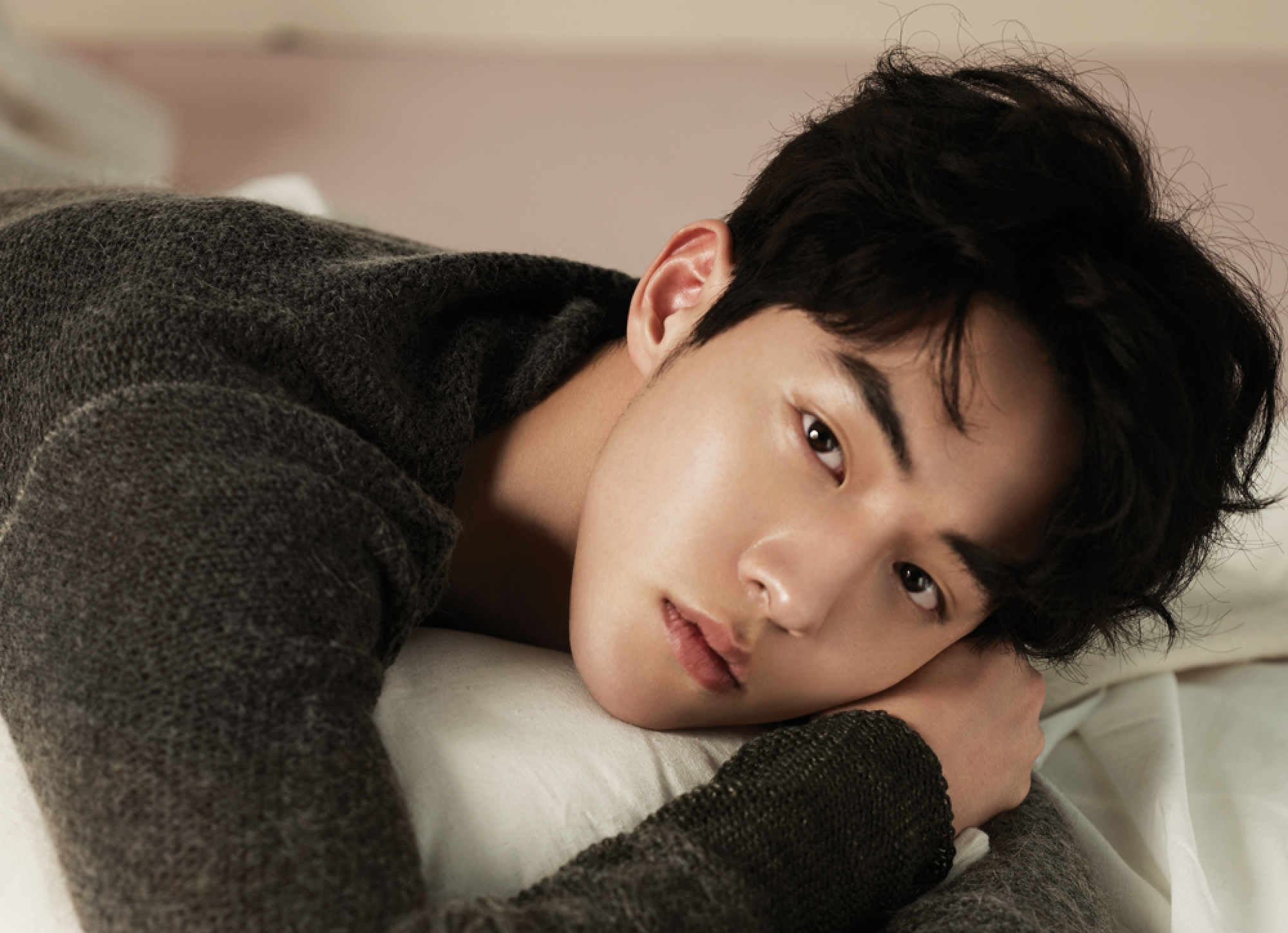
As I wrap up my thoughts, this article would not be completely honest without me mentioning that I also fell in love with K-dramas because their actors and actresses are BREAKTAKINGLY GORGEOUS😩😭. Yes, I know. But have you seen their silky-smooth, glass skin? And stinkin’ cute, sexy features? These are admittedly my more shallow, vain reasons for being sucked into K-dramas, but is, was, a gurl to be blamed? I love watching fine people on my screen; it is not my faulllllt😭

Photo credit: Pinterest
Okay, on a serious note.
K-dramas may grow less popular someday. They might even experience bigger drops in quality. Chinese dramas may surpass them in the future (trust me, they are up and coming). But Korean dramas will always hold a special place in my heart.
Apart from all the main reasons I’ve detailed in this article, I love, love, love the amazing communities that have been built locally and globally because of K-dramas. There are millions of passionate K-drama fans around the world, and getting to experience the contagious enthusiasm and deep sense of belonging they’ve given to me is something I’ll be eternally grateful for.

I have made a close, long-time friend just from watching and discussing K-dramas. I also discovered my passion for blogging and reviewing shows just by watching K-dramas. They’ve inspired me endlessly creatively, and exposed me to the deepest parts of myself in ways no other world has.
Similarly, I have observed how they’ve inspired other industries—Chinese dramas and Nollywood (my country’s movie industry), to be specific—to produce better, carefully crafted stories that deeply resonate, heal, touch hearts, and teach resounding lessons. And that makes me sooo proud and happy.
The impact is real, my friend. Freakin’ real. Whether I have convinced you or not, take at least one thing away from this long-ass piece of mine: Korean dramas are not merely the clichés and stereotypes you think they are made of.
They are much deeper, much realer, much more inspiring than you could ever imagine.